
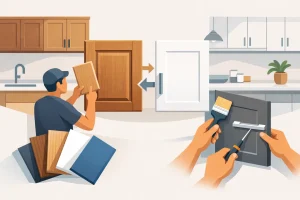
A dated kitchen does not always need a full demolition to feel new again. If your cabinet boxes are solid, level, and still work for the way your household cooks and stores items, kitchen cabinet refacing options can provide a major visual upgrade without the cost, disruption, and extended timeline of replacing every cabinet.
For homeowners in Everett and throughout Snohomish County, the right choice comes down to more than door color. Material durability, the condition of the existing cabinets, moisture exposure, layout limitations, and the quality of installation all affect whether refacing is a smart investment.
When Cabinet Refacing Makes Sense
Cabinet refacing keeps the existing cabinet boxes in place. The visible exterior surfaces are covered with new material, while doors, drawer fronts, hardware, and often molding are replaced. The basic kitchen layout stays the same, but the finish and style change substantially.
This approach is a good fit when cabinet boxes are structurally sound and the layout already works. Maybe the kitchen has enough storage, the sink and appliances are in practical locations, and the cabinets open and close properly. In that situation, removing usable cabinets may add unnecessary cost.
Refacing may not be the best answer if cabinets have significant water damage, swollen particleboard, broken frames, persistent mold concerns, or poor installation. It is also limiting when the real problem is the layout. If you need to move walls, add an island, change appliance locations, or gain much more storage, new cabinetry and a broader kitchen remodel usually make more sense.
Kitchen Cabinet Refacing Options by Material
The material on the cabinet faces affects appearance, maintenance needs, and long-term performance. There is no single best choice for every home. A busy family kitchen, a rental property, and a home being prepared for sale can each call for a different approach.
Wood Veneer Refacing
Wood veneer uses a thin layer of real wood applied to the exposed cabinet frames and end panels. New doors and drawer fronts can be selected in a coordinating wood species and finish. This option gives homeowners the warmth and natural grain variation of wood without building entirely new cabinet boxes.
Veneer works well for traditional, transitional, and many modern kitchen styles. Maple, oak, cherry, alder, and walnut looks are common choices. It can be stained or finished to complement flooring, trim, and other woodwork in the home.
The trade-off is maintenance and cost. Natural wood can show scratches or wear more readily than some synthetic surfaces, especially around high-use areas. It also needs careful finishing and proper installation to perform well in kitchens where steam, spills, and daily cleaning are unavoidable.
Laminate Refacing
Laminate is a durable manufactured surface available in a wide range of colors, patterns, and wood-look finishes. It is often chosen for its practical price point, easy cleanup, and consistent appearance. Smooth whites, warm neutrals, matte black, and realistic wood grains can all work well depending on the home.
For households that want a clean update without a premium wood price, laminate can be a sensible solution. It resists many everyday stains and is easy to wipe down, making it practical for active kitchens and rental properties.
Quality matters here. Lower-grade materials or rushed installation can lead to lifting edges, visible seams, or peeling over time. Heat and moisture are common concerns around dishwashers, sinks, and ranges, so the cabinet surfaces must be properly prepared and sealed.
Rigid Thermofoil Doors
Rigid thermofoil, often called RTF, consists of a vinyl-like material heat-fused over engineered wood doors. It creates a smooth, uniform finish and can be formed with detailed door profiles that would be more expensive in painted wood.
RTF doors are popular for clean-lined white or neutral kitchens. They are generally easy to maintain and offer a polished look at a reasonable cost. Because the surface is nonporous, routine cleaning is straightforward.
The main consideration is heat. Areas near ovens, ranges, or heat-producing appliances need special attention, since excessive heat can affect thermofoil over time. Homeowners should also know that deep damage is more difficult to repair invisibly than damage to a painted wood door.
Painted Wood Doors and Drawer Fronts
A painted cabinet front can completely change the character of an older kitchen. White remains a dependable choice for brightening compact kitchens, while soft gray, warm greige, navy, and muted green can add contrast without making the room feel overly trendy.
Painted wood doors offer design flexibility and can be a strong choice for homeowners who want shaker-style cabinets or a more custom appearance. They pair well with updated knobs or pulls, new countertops, and a backsplash refresh.
Paint does require realistic expectations. Painted surfaces can chip at corners and around handles, particularly in homes with heavy kitchen use. A professional-grade finish and careful door preparation make a meaningful difference in how well the cabinets hold up.
Door Styles Can Change the Kitchen More Than Color
The door style often has as much visual impact as the material. Shaker doors remain a practical, versatile choice because they work with many home styles and are easy to coordinate with future updates. Flat-panel doors suit more modern kitchens, while raised-panel doors fit many traditional homes.
Glass-front upper cabinets can break up a wall of solid doors and create a more open look. They work best when the cabinet contents can stay reasonably organized. Adding just one or two glass-door sections is often enough to create interest without increasing cleaning and organizing demands across the entire kitchen.
Hardware should be selected as part of the plan rather than an afterthought. Brushed nickel, matte black, bronze, and brass-toned pulls each create a different effect. More importantly, handles and pulls protect cabinet finishes by reducing the oils and wear that build up around door edges.
What Refacing Will Not Fix
Refacing improves cabinet appearance, but it does not correct every kitchen problem. Existing cabinet dimensions, shelf depth, and the placement of plumbing and appliances usually remain the same. You can often add useful features such as pull-out trays, soft-close hinges, new drawer slides, or a pantry organizer, but there are limits based on the original cabinet construction.
It also will not fix damaged countertops, poor lighting, worn flooring, or an outdated backsplash. That does not mean those items must all be replaced at once. In many Everett-area homes, a well-planned phased update works well: reface cabinets first, then coordinate countertops, lighting, or flooring when budget and timing allow.
Before committing, look closely under the sink, around the dishwasher, and at the bottom edges of lower cabinets. Pacific Northwest moisture and small plumbing leaks can cause hidden damage. Addressing those issues before cosmetic work protects the investment and prevents a new finish from covering an old problem.
Choosing Between Refacing, Painting, and Replacement
Painting existing cabinet doors is typically the least expensive visual update, but it depends heavily on door condition and surface preparation. It can be worthwhile for solid wood cabinets with a style you still like. It is less reliable on damaged laminate, peeling thermofoil, or doors with deep wear.
Refacing costs more than painting but provides new doors, drawer fronts, and visible exterior surfaces. It is a middle-ground option for homeowners who want a more complete transformation while retaining sound cabinet boxes.
Full replacement offers the most flexibility. It is the right path when function, storage, layout, or cabinet condition need major improvement. It also requires a larger budget and usually involves more disruption, particularly when plumbing, electrical work, countertops, and flooring are part of the project.
Plan for a Durable Result
A successful refacing project starts with an honest assessment of the existing cabinets. The boxes should be secure, square, dry, and firmly attached to the wall. Measurements must be precise, and the new doors need consistent alignment. Small details such as matching exposed end panels, trim, toe kicks, and filler strips are what make the finished kitchen look intentional rather than patched together.
Think about daily use before choosing a finish. Families who cook often may prioritize easy-clean surfaces and durable hardware. Homeowners planning to sell may prefer broadly appealing colors and simple shaker doors. A landlord may focus on materials that are resilient, easy to maintain, and appropriate for the property’s price range.
Kitchen cabinet refacing is most valuable when it solves the right problem: an outdated appearance on a kitchen that still functions well. With sound cabinet boxes, suitable materials, and careful workmanship, it can give your home a cleaner, more current kitchen without rebuilding what is already serving you well. A local contractor such as JHL Solution LLC can help assess whether refacing fits the condition of your cabinets and the goals you have for the space.
Leave a Reply