
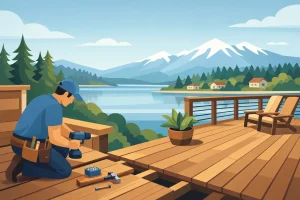
A deck in Everett does not usually fail all at once. It starts with a soft board near the stairs, a railing that shifts a little under your hand, or fasteners that keep working loose after another stretch of wet weather. That is why deck repair Everett WA homeowners schedule early often costs less, takes less time, and does a better job of protecting both safety and property value.
In the Pacific Northwest, decks deal with constant moisture, temperature swings, moss growth, and long damp seasons that slowly wear down wood, hardware, and structural connections. A deck can still look decent from the yard while hiding rot, movement, or water damage underneath. For homeowners in Everett and nearby communities, the real question is usually not whether a deck needs attention, but how much attention it needs and how soon.
What deck problems usually show up in Everett
Local weather plays a big role in how decks age. Rain does not just discolor wood. Over time, it works into cracks, around fasteners, and into joints where water tends to sit. If the deck was not sealed properly, built with poor drainage in mind, or simply has years of wear on it, that moisture starts creating bigger issues.
One of the most common problems is surface board deterioration. Deck boards may cup, split, soften, or become slick from algae and moss. That can make the deck less comfortable to use, but surface wear is not always the main concern. In many cases, the more serious damage happens below the walking surface, where framing, joists, ledger connections, and posts are exposed to repeated moisture.
Railings are another frequent issue. A railing that feels loose is not just annoying. It can point to failed fasteners, weakened posts, or rot at key attachment points. Stairs also tend to age faster because they take concentrated foot traffic and collect water around treads and stringers.
Sometimes the deck itself is still structurally sound, but certain areas have become unsafe or unattractive enough that repair makes sense. In other cases, a deck may have multiple connected issues, and patching one board at a time will not solve the real problem.
Signs your deck repair in Everett WA should not wait
Some deck issues are easy to spot, while others are not obvious until someone gets underneath and checks the framing. If boards feel spongy, railings wobble, stair treads shift, or posts show visible decay near the base, it is time for a closer look. Rusting hardware, lifted nails, cracked boards, and standing water after rain are also warning signs.
There are also subtler signs that homeowners sometimes overlook. If a door threshold to the deck stays wet for too long, if the deck seems to slope differently than it used to, or if boards around fasteners have darkened and softened, water may already be working deeper into the structure. Even small movement where the deck meets the home deserves attention because ledger problems can become serious if left alone.
A useful rule is this: cosmetic wear may be inconvenient, but structural movement is urgent. It is always better to inspect early than to wait until the problem affects a larger section of the deck.
Repair or replace? It depends on the condition underneath
Not every damaged deck needs full replacement. In many cases, targeted repair is the smarter move, especially when the main framing is still sound. Replacing deck boards, reinforcing railings, repairing stairs, swapping damaged sections of trim, or correcting isolated rot can extend the life of the deck without the cost of starting over.
That said, repair has limits. If the framing has widespread rot, if multiple structural members are failing, or if the original construction was not done correctly, replacement may be the more practical long-term option. Homeowners sometimes spend too much on repeated small fixes when the better investment would have been a larger corrective project from the start.
This is where an honest evaluation matters. A dependable contractor should be able to explain what is still solid, what is compromised, and where a repair makes sense versus where it only delays a bigger issue. Straight answers save money.
What a solid deck repair process should include
Good deck repair starts with inspection, not assumptions. The visible problem is not always the full problem. A cracked board may be just a cracked board, or it may be a sign that water has been trapped around framing below. A leaning railing may need new hardware, or it may need post replacement and reinforcement.
Once the condition is clear, the repair plan should focus on safety, durability, and appearance in that order. Structural fixes come first. That may include replacing damaged framing members, tightening or upgrading hardware, correcting unstable posts, or rebuilding stairs and rail sections that no longer meet a safe standard. After that, surface repairs and finish work help restore the deck’s look and usability.
Material matching is part of the job too. A repair should not leave the deck looking patched together if it can be avoided. Sometimes exact matching is possible. Other times, especially on older decks, the better approach is to replace a full section so the finished result looks more consistent and performs better over time.
Why local weather makes deck maintenance more important
Everett homeowners know that exterior features take a beating here. The issue is not just rain volume. It is the way damp conditions linger. When a deck stays wet for days, moisture has more time to penetrate wood fibers, feed biological growth, and speed up hardware corrosion.
That is why maintenance and repair often go hand in hand. Cleaning off moss and algae helps, but it does not reverse rot. Applying stain or sealer can extend life, but it will not fix weak railings or decayed framing. Surface care matters, but it only works well when the deck itself is in solid condition.
For many properties, regular attention prevents the bigger repair cycle. A homeowner who replaces a few failing boards, corrects drainage issues, and reinforces weak spots now may avoid a much larger project later. That is especially true for decks with heavy exposure to shade, trees, or poor airflow.
Choosing a contractor for deck repair Everett WA
Homeowners are not just hiring someone to replace boards. They are trusting a contractor to identify safety issues, make sound repair decisions, and protect an important part of the home. That means responsiveness, workmanship, and clear communication matter just as much as price.
A good local contractor should understand how decks perform in Snohomish County weather and how common moisture-related problems show up over time. They should also be comfortable handling repair work that connects to bigger home maintenance concerns, whether that means addressing water intrusion near an exterior door, replacing damaged trim, or making related improvements that help the repaired deck last longer.
JHL Solution LLC serves homeowners who want that kind of practical, dependable help. For many households, the biggest benefit is not just getting the deck fixed. It is knowing the work is being handled by a local company that understands how repair, maintenance, and long-term home value all connect.
When small deck issues become larger home issues
A damaged deck does not always stay a deck-only problem. If water is being directed toward the home instead of away from it, nearby siding, trim, thresholds, or framing can start to suffer too. If railings or stairs are unsafe, the deck becomes a liability for family members, guests, or tenants. For landlords and property owners, that risk alone is reason enough to act quickly.
There is also the resale factor. Buyers notice exterior neglect fast. A deck with visible wear, soft spots, or shaky railings can make the whole property feel less maintained, even if the rest of the house is in good shape. Repairing the deck helps with safety, but it also improves curb appeal and confidence in the property overall.
The best time to schedule repair
Many homeowners wait until summer when they want to use the deck more often, but that is not always the best time to first address damage. If warning signs show up in fall, winter, or early spring, it is usually better to schedule inspection and repair before another wet season makes things worse.
Timing also depends on the scope of the work. Minor repairs can often be handled quickly. More extensive structural issues may require a larger plan. Either way, acting early gives you more options. Waiting tends to reduce them.
If your deck feels less stable than it used to, looks more weathered than it should, or has areas you no longer trust underfoot, that is usually the house telling you it is time to take a closer look. A well-repaired deck should feel solid, safe, and ready for daily use in every season Everett brings.
Leave a Reply