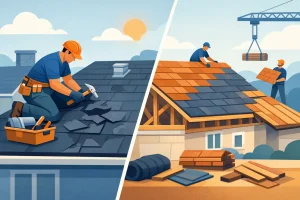
A ceiling stain after a week of Everett rain can make a small roof issue feel urgent. The right answer is not always obvious: roof repair vs replacement depends on where the water is entering, how much of the roof is affected, and how much useful life remains in the existing materials. A careful assessment helps homeowners fix the real problem without paying for work they do not need.
In Snohomish County, roofs handle long wet seasons, wind-driven rain, moss growth, debris from nearby trees, and occasional freezing conditions. Those factors can turn a loose shingle or clogged valley into a leak, but they do not automatically mean the entire roof has failed.
Roof Repair vs Replacement: Start With the Condition
A roof repair is usually the practical choice when damage is limited and the rest of the roof is in sound condition. Replacing missing or cracked shingles, sealing a compromised flashing detail, repairing a small section of damaged decking, or correcting a leak around a vent can restore protection at a much lower cost than a full replacement.
Replacement becomes the stronger long-term value when problems are widespread or the roof is approaching the end of its expected service life. A roof with repeated leaks, broad shingle deterioration, soft decking in several areas, or substantial moss-related wear may no longer be a good candidate for one more patch.
The key is to look beyond the visible water spot. Water can travel along roof framing before it appears indoors, so the stain on the ceiling is not always directly below the source. A thorough inspection should consider the shingles, flashing, penetrations, valleys, gutters, attic ventilation, and the condition of the roof deck where accessible.
When a Roof Repair Makes Sense
Repair is often the right path when the roof is relatively young, the damaged area is isolated, and matching materials are available. A focused repair preserves the investment already made in the roof while stopping water from reaching insulation, framing, drywall, and finishes below.
For example, a few shingles may lift after high winds near Mukilteo or Marysville. Flashing around a chimney or skylight can loosen over time. A plumbing vent boot may crack and allow water through an otherwise healthy roofing system. These are common repair situations, especially when addressed early.
A repair also makes sense when the issue is caused by maintenance rather than overall roof failure. Gutters packed with leaves can force water to back up at the roof edge. Moss and branches can hold moisture against shingles. Debris can block valleys and direct water beneath roofing materials. Cleaning and correcting the affected area can protect the roof without replacing it.
Homeowners should still be realistic about the limits of a repair. A repair solves the identified defect. It does not reset the age of an older roof or prevent unrelated areas from failing later. If the roof is nearing the end of its lifespan, a repair may be a sensible short-term measure, but it should be planned with future replacement in mind.
Signs Replacement May Be the Better Investment
A full roof replacement involves more upfront cost and more work, but it can prevent the cycle of repeated service calls and interior water damage. It also gives the contractor an opportunity to inspect and address hidden deck damage, improve flashing details, and install a complete roofing system designed to work together.
Replacement is worth serious consideration when you see several of these conditions:
- Shingles are curling, cracking, losing granules, or becoming brittle across large areas.
- Leaks return in different locations after prior repairs.
- The roof deck feels soft, sags, or shows evidence of widespread moisture damage.
- The roof is near or beyond its expected age, particularly if its history is unknown.
- Moss, algae, or trapped debris has caused broad deterioration rather than a single affected spot.
Age alone should not make the decision. A well-maintained roof can sometimes perform longer than expected, while a younger roof with poor installation, storm damage, or inadequate ventilation may need major work sooner. Condition, leak history, and the scope of deterioration matter more than any one factor.
For homeowners preparing to sell, replacement can also improve curb appeal and reduce buyer concerns about a major upcoming expense. For homeowners planning to stay, it can offer more confidence through wet seasons and make it easier to budget for other improvements, such as windows, gutters, or exterior maintenance.
The Cost Question Is About More Than Today’s Price
It is natural to compare the immediate cost of a repair with the cost of a replacement. Repair is less expensive in many cases, and there is no benefit to replacing a roof that still has years of dependable service left. But the lowest initial price is not always the lowest cost over time.
Consider a roof that needs a repair every year or two, has aging shingles throughout, and has already allowed water into the attic. Continuing to patch individual leaks can become expensive, especially if each leak creates drywall, insulation, paint, or mold-related cleanup needs. In that situation, replacement may be the more predictable investment.
On the other hand, a single leak on a roof that is otherwise in good shape should not be used to justify a full replacement without evidence. A responsible recommendation explains what failed, what work will correct it, and what conditions could affect the roof later.
Material availability is another practical consideration. Older shingles can fade, and exact color matches may no longer be manufactured. A repair may still be structurally effective even if the new section looks slightly different. For highly visible roof areas, homeowners may decide that appearance matters enough to consider a larger section replacement or a complete reroof.
Pacific Northwest Conditions Change the Decision
Everett-area roofs need dependable water management. Rainfall itself is not usually the problem when a roof is properly installed and maintained. Problems begin when water cannot move off the roof as intended or when it finds openings at flashing, penetrations, valleys, and worn shingles.
Moss deserves special attention. It can make a roof look older than it is, but its presence does not always mean replacement is necessary. Light surface growth may be manageable with appropriate cleaning and maintenance. Heavy moss that has lifted shingles, held moisture against the roof, or contributed to material breakdown is a more serious concern.
Ventilation matters as well. Poor attic ventilation can trap heat and moisture, which may shorten shingle life and contribute to condensation issues. During a replacement, it is often possible to evaluate whether ventilation and intake airflow are adequate. During a repair, the focus may remain on the localized defect unless there are signs that ventilation is contributing to the problem.
Get a Clear Assessment Before Authorizing Work
A good roofing decision starts with clear information, not pressure. Ask for an explanation of the cause of the leak or visible damage, the condition of surrounding materials, and whether the proposed solution is intended as a long-term repair or a temporary measure.
It is also reasonable to ask whether the roof decking appears sound, whether gutters and drainage are contributing to the issue, and whether nearby trees are creating ongoing debris or branch damage. These details help prevent a repair from being undone by the same condition next season.
Photographs can be especially helpful when damage is not easily visible from the ground. They allow homeowners to see missing shingles, worn flashing, moss buildup, exposed fasteners, or damaged valleys and better understand the recommendation.
JHL Solution LLC approaches roof concerns with the same practical mindset used across home maintenance work: address the issue in front of you, protect the rest of the property, and recommend only the scope that makes sense for the home.
A roof does not need to be perfect to be worth repairing, and it does not need to be actively leaking in every room to justify replacement. Acting when the evidence is clear can protect your home, your budget, and the comfort of everyone inside before the next stretch of Pacific Northwest rain arrives.
Leave a Reply