
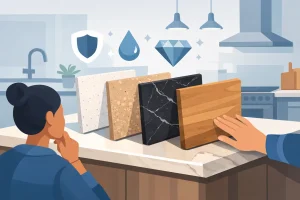
A countertop has to handle more than a few dinner plates. It becomes the landing spot for groceries, school papers, hot pans, wet dishes, and daily cooking. Knowing how to choose kitchen countertops means looking past a showroom sample and choosing a surface that fits how your household actually lives.
For homeowners in Everett and throughout Snohomish County, the best choice also needs to work with the Pacific Northwest climate. Indoor moisture, rainy-day traffic, and the occasional kitchen leak can all affect how materials perform over time. A beautiful countertop is valuable, but a surface that stays attractive and functional through real daily use is the better investment.
Start With How You Use Your Kitchen
Before comparing colors or edge profiles, think about the work your counters need to do. A busy family kitchen needs different features than a kitchen used mostly for coffee, takeout, and occasional entertaining. If you cook often, set down hot cookware, or have children who use the island for homework and snacks, durability and easy cleanup should lead the decision.
Also consider the layout. Large islands tend to show off dramatic veining and deserve a material with a consistent appearance across a wide surface. Smaller kitchens may benefit from lighter colors that reflect more light and keep the room from feeling closed in. If you are updating cabinets at the same time, choose the cabinet color and countertop together rather than treating either as an afterthought.
Your maintenance habits matter just as much. Natural stone can be a great fit for homeowners who appreciate variation and do not mind periodic sealing. If you want to wipe the counter down and move on with your day, engineered quartz, solid surface, or porcelain may be a better match.
How to Choose Kitchen Countertops by Material
No countertop material wins in every category. The right choice depends on the balance between appearance, maintenance, heat resistance, scratch resistance, and budget.
Quartz: Reliable for Busy Homes
Quartz is an engineered stone made from natural quartz and resin. It is one of the most common choices for kitchen remodeling because it offers a polished look without the regular sealing associated with many natural stones. Its nonporous surface resists stains from coffee, oil, juice, and everyday food spills, making it especially practical for active households.
Quartz comes in many colors and patterns, including options that resemble marble or concrete. The trade-off is heat. Do not place a hot pot or baking sheet directly on quartz, because sudden high heat can damage the resin. Use trivets, and keep in mind that quartz can have visible seams on long runs or large islands.
Granite: Natural Character and Strong Heat Resistance
Granite remains a solid option for homeowners who want natural stone and a one-of-a-kind appearance. Each slab has its own movement, mineral variation, and color depth. It is highly durable and generally handles heat better than quartz, which is useful for people who cook frequently.
Granite does require sealing to help prevent staining, and some lighter or more porous varieties need more attention than others. A properly selected and maintained granite countertop can serve a kitchen well for many years. Ask about the specific slab rather than assuming all granite performs the same way.
Marble: Beautiful, but Not Carefree
Marble has a classic look that works well in traditional, historic, and high-end kitchen designs. It is cool to the touch and popular with avid bakers. However, it is softer and more porous than granite or quartz, so it can scratch, stain, and etch when exposed to acidic foods such as lemon juice, vinegar, or tomato sauce.
For some homeowners, those marks become part of marble’s character. For others, they quickly become frustrating. Marble works best when you understand and accept that it will develop a lived-in finish over time. It can also be used selectively, such as on a baking station or a lower-use section of the kitchen.
Porcelain: Strong Performance With a Modern Look
Porcelain slabs are gaining attention for their resistance to heat, stains, scratches, and ultraviolet light. They can mimic stone, wood, concrete, and other materials while offering a thin, contemporary profile. Porcelain is a strong choice for a homeowner who wants high performance and a clean modern style.
Installation requires experienced handling. Large slabs can be difficult to transport and fabricate, and edges may chip if they are not installed correctly. The material itself is durable, but quality workmanship is essential to getting the finished result right.
Solid Surface and Laminate: Practical Budget Options
Solid surface countertops provide a smooth, nonporous finish with inconspicuous seams and integrated sink options. Small scratches can often be repaired, which makes the material useful in hardworking kitchens. It does not offer the same heat resistance as stone, so hot pans still need protection.
Modern laminate is far more attractive than many homeowners remember. It is available in convincing stone and wood looks, comes at a lower cost, and can be a smart choice for rental properties, refresh projects, or kitchens with a tight budget. Its weak points are heat, deep cuts, and water getting into exposed seams or damaged edges. Proper installation around sinks is particularly important.
Set a Realistic Budget for the Whole Project
Countertop pricing is not just the cost of the slab or material. Your final estimate may include measurements, fabrication, cutouts for the sink and cooktop, edge details, backsplash removal, old countertop disposal, plumbing disconnection and reconnection, and installation.
A lower material price can sometimes be offset by more complex labor, while a premium material may have fewer maintenance costs over the years. Do not compare quotes based only on price per square foot. Ask what is included and whether the estimate accounts for your actual kitchen layout.
If your budget has limits, prioritize the areas that affect daily function. A durable main counter and island may be worth more than an expensive decorative edge. You can often get a cleaner, longer-lasting result by choosing a simpler profile and putting the budget toward quality installation.
Match Color and Pattern to the Rest of the Room
A countertop should support the room, not compete with every other finish. If your cabinets have pronounced grain, a calmer countertop usually keeps the kitchen balanced. If the cabinetry is simple white, gray, or natural wood, you may have more room for veining or movement in the counter.
Bring cabinet doors, flooring samples, backsplash tile, and paint swatches when reviewing countertop choices. Samples look different under showroom lighting than they do in a home with north-facing windows or warm under-cabinet lighting. View larger samples whenever possible, especially with heavily veined materials. A small piece may look subtle, while a full slab can make a much stronger statement.
Think about resale, but do not design only for a future buyer. Neutral counters generally appeal to more people, yet a kitchen should still feel right for your home and your routine. The most dependable choices tend to be those that fit the home’s style and are easy to maintain.
Plan for Water, Seams, and Installation Details
Countertops are only as dependable as the preparation and installation behind them. Cabinets need to be level and adequately supported, especially under heavy stone slabs. The sink cutout, faucet holes, seams, wall transitions, and backsplash connection all need careful attention.
Water is a particular concern around the sink, dishwasher, and any seam near a wet area. A small plumbing leak can damage cabinet boxes, loosen laminate edges, or create conditions for mold if it goes unnoticed. Before installing new counters, address signs of water damage, soft cabinet bases, or existing leaks. Replacing a surface without correcting the source of moisture only delays a larger repair.
For natural stone, ask where seams will be placed and how the pattern will align. For any material, confirm the overhang needed for seating and whether additional support brackets are required. These details are easy to overlook during planning but have a major effect on appearance and long-term performance.
Choose a Surface You Will Still Appreciate Years From Now
Trends change quickly, but practical needs rarely do. A countertop that resists stains, fits your cooking habits, works with your cabinets, and is installed with care will serve your home better than a material chosen only because it is popular this season.
When planning a kitchen remodel, JHL Solution LLC can help homeowners evaluate the condition of the existing space and coordinate improvements that support a lasting result. The best countertop is not simply the one that looks good on install day. It is the one that makes daily life easier while protecting the comfort, function, and value of your home.
Leave a Reply